

When you begin searching for a home—especially a new-construction home—you may come across the term master-planned community. But what does that actually mean, and how is it different

Dated: September 20 2026
Views: 1
When you begin searching for a home—especially a new-construction home—you may come across the term master-planned community. But what does that actually mean, and how is it different from a traditional neighborhood?
A master-planned community is developed according to a larger, long-term plan. Instead of focusing only on individual homes, the plan may account for roads, sidewalks, green spaces, amenities, commercial areas, schools, and future phases of development. Some communities include several builders, while others are developed by one builder or a smaller group.
For buyers, the appeal often comes down to convenience, lifestyle, and the opportunity to choose from a range of homes within a thoughtfully designed setting. However, every community is different, so it is important to look beyond the model homes and understand exactly what is included.
Amenities and features vary widely. Depending on the neighborhood, you might find:
Pools, clubhouses, or fitness centers
Parks, playgrounds, and open green spaces
Sidewalks, walking trails, or bike paths
Sports courts or community gathering areas
Nearby shops, restaurants, schools, or services
Community events and resident activities
Multiple builders offering different floor plans and price ranges
Not every master-planned community will include all of these features. Some focus on resort-style amenities, while others emphasize larger homesites, natural surroundings, walkability, or convenient access to nearby towns and employment centers.
When several builders are active in the same community, buyers may be able to compare different floor plans, finishes, homesite locations, incentives, and price points without starting their search over in a completely different part of town.
Master-planned communities typically follow established design standards for streets, landscaping, common spaces, and home exteriors. This can create a more consistent look and feel throughout the neighborhood.
Pools, trails, playgrounds, and gathering spaces can make it easier to enjoy the neighborhood and connect with other residents. For growing families, move-up buyers, and active adults, these shared features may be a major part of the decision.
Because these communities are developed in phases, there is usually a broader vision for how the area may grow. That can give buyers helpful context about future homes, amenities, roads, and commercial development—although plans can change and should always be independently verified.
For a first-time buyer, comparing homes and neighborhoods can feel overwhelming. A master-planned community may make the search easier by bringing several home types, builders, and lifestyle options together in one location.
New homes may also offer modern layouts, energy-efficient features, builder warranties, and fewer immediate maintenance concerns than some older properties. Still, buyers should compare the complete cost of ownership—not just the advertised monthly payment or base price.
Important expenses may include homeowner association dues, amenity fees, property taxes, insurance, upgrades, closing costs, and future maintenance.
The entrance, model homes, and amenity renderings may look impressive, but the details matter. Before signing a contract, ask:
Which amenities are complete, and which are only planned?
Is there a timeline for future phases or construction?
What are the current HOA dues, and what do they cover?
Are there additional initiation, amenity, or capital-contribution fees?
What restrictions apply to fences, sheds, parking, rentals, exterior changes, or home-based businesses?
Are schools, shopping, and other conveniences already nearby, or are they part of a future plan?
How many builders are active in the community, and what incentives are they offering?
Could ongoing construction affect traffic, noise, or access?
Are there special tax districts or other assessments associated with the property?
What should you know about resale competition while the builder is still selling new homes?
Answers can change by community and even by phase, so review the current documents rather than relying only on marketing materials or verbal statements.
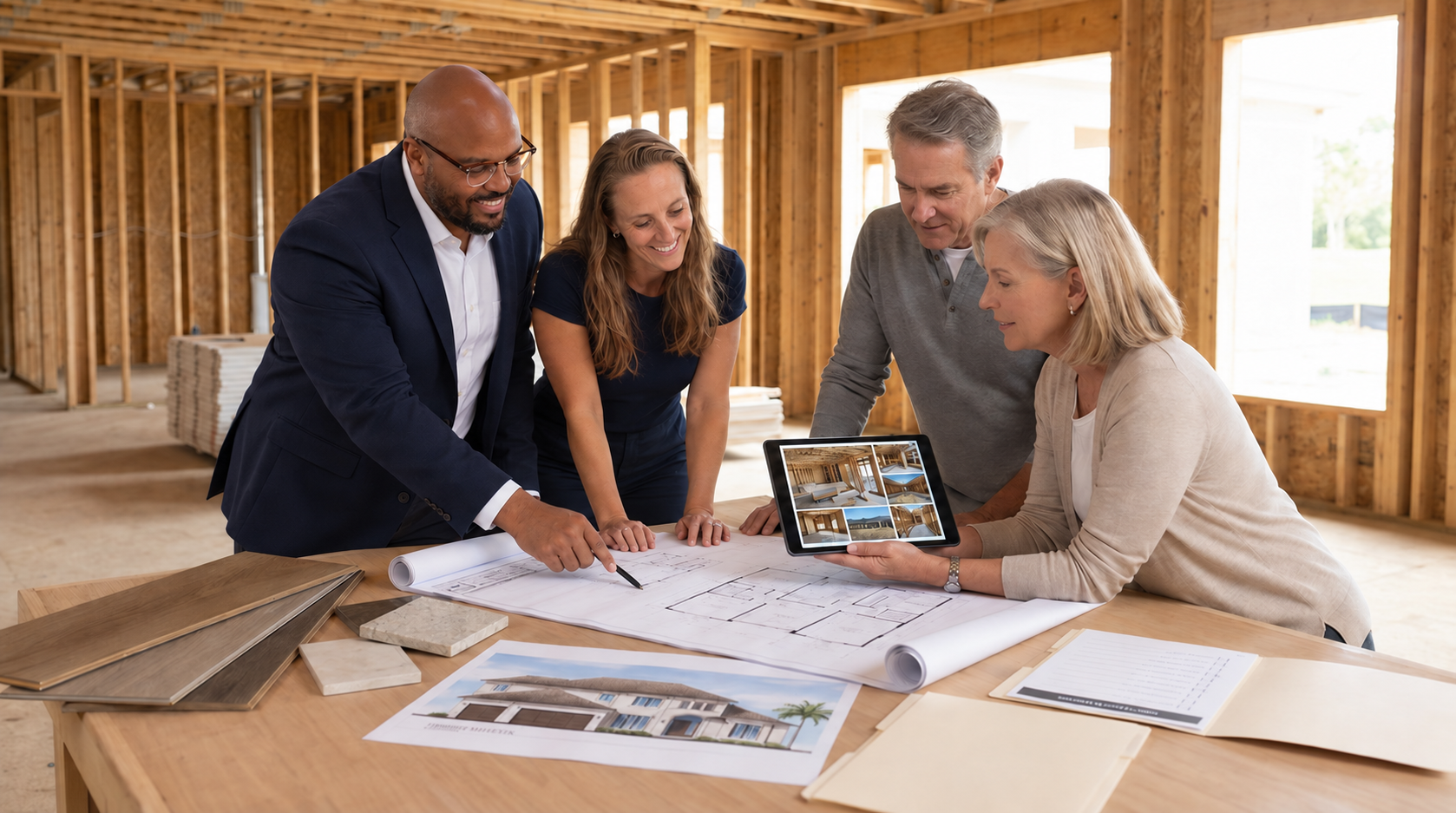 New Construction: Why Buyer Representation Matters
The friendly representative in a model home works for the builder. Buyers are allowed to have their own real estate agent—someone who can help them compare communities, evaluate builder incentives, understand contract deadlines, review homesite considerations, and ask questions that may be easy to overlook in the excitement of choosing a home.
It is best to involve your agent before your first visit or online registration. Many builders require an agent to accompany or register the buyer from the beginning for the agent to represent them in the transaction.
No neighborhood can guarantee appreciation. Home values are influenced by the purchase price, location, market conditions, schools, taxes, HOA management, future development, supply, and the condition of the property.
A well-maintained community with desirable amenities and convenient access may remain attractive to future buyers. At the same time, buyers should consider HOA costs, community restrictions, planned construction, and competition from new homes when thinking about resale.
The best choice is not simply the community with the longest amenity list. It is the one that fits your budget, daily routine, long-term plans, and preferred way of living.
The Raleigh–Wake County area and surrounding towns offer a wide range of master-planned communities, from amenity-rich developments to quieter neighborhoods with trails, green space, and larger homesites. The right fit will depend on more than the house itself. Commute time, schools, monthly costs, future development, builder reputation, and resale considerations should all be part of the comparison.
At Thompson Residential Group at RE/MAX Legacy, we help buyers look beyond the model-home experience and understand the complete picture. Whether you are purchasing your first home, moving into a larger space, or exploring new construction, we can help you compare communities and builders with confidence.
Thinking about buying in a master-planned community? Let’s talk about what matters most to you and build a focused list of the best options for your lifestyle and budget.
Thompson Residential Group at RE/MAX Legacy — Rooted in Community, Committed to Results.

William's career has always centered around one thing: helping people make confident financial decisions. His professional journey began in the financial industry before moving into mortgage lending, ....
When you begin searching for a home—especially a new-construction home—you may come across the term master-planned community. But what does that actually mean, and how is it different
 Copyright 2026 Triangle MLS, Inc. of North Carolina. All rights reserved.
The data relating to real estate for sale on this web site comes in part from the Triangle MLS, Inc. of North Carolina. Real estate listings held by brokerage firms other than Thompson Residential Group are marked with the Broker Reciprocity logo and detailed information about them includes the name of the listing brokers. Brokers make an effort to deliver accurate information, but buyers should independently verify any information on which they will rely in a transaction. The listing broker shall not be responsible for any typographical errors, misinformation, or misprints, and they shall be held totally harmless from any damages arising from reliance upon this data. This data is provided exclusively for consumer's personal, noncommercial use.
Closed (sold) listings may have been listed and/or sold by a real estate firm other than the firm(s) featured on this website. Closed data is not available until the sale of the property is recorded in the MLS. Home sale data is not an appraisal, CMA, competitive or comparative market analysis, or home valuation of any property.
Listings marked with an icon are provided courtesy of the Triangle MLS, Inc. of North Carolina, Internet Data Exchange Database.
This site is monitored for scraping. Any use of listing data obtained from this web site, other than by a consumer looking to purchase real estate, is prohibited.
This data has been updated as of September 20, 2026 6:06 PM UTC
Copyright 2026 Triangle MLS, Inc. of North Carolina. All rights reserved.
The data relating to real estate for sale on this web site comes in part from the Triangle MLS, Inc. of North Carolina. Real estate listings held by brokerage firms other than Thompson Residential Group are marked with the Broker Reciprocity logo and detailed information about them includes the name of the listing brokers. Brokers make an effort to deliver accurate information, but buyers should independently verify any information on which they will rely in a transaction. The listing broker shall not be responsible for any typographical errors, misinformation, or misprints, and they shall be held totally harmless from any damages arising from reliance upon this data. This data is provided exclusively for consumer's personal, noncommercial use.
Closed (sold) listings may have been listed and/or sold by a real estate firm other than the firm(s) featured on this website. Closed data is not available until the sale of the property is recorded in the MLS. Home sale data is not an appraisal, CMA, competitive or comparative market analysis, or home valuation of any property.
Listings marked with an icon are provided courtesy of the Triangle MLS, Inc. of North Carolina, Internet Data Exchange Database.
This site is monitored for scraping. Any use of listing data obtained from this web site, other than by a consumer looking to purchase real estate, is prohibited.
This data has been updated as of September 20, 2026 6:06 PM UTC
